This tea caddy (natsume) by Ōshita Kōsen (大下香仙), a student of the master Ōshita Sekka (1874–1960) from Kanazawa, belongs to the refined Kaga maki-e tradition, known for its subtle use of gold and vermilion powder. The camellia motif (tsubaki, 椿) is often one of the first flowers to appear in the tearoom when nature is still bare.
Motif
On the dark lacquer base, a refined camellia motif (tsubaki, 椿) has been applied in gold and vermilion accents. The rounded petals and balanced composition align closely with the aesthetics of Kaga maki-e, which focuses on subtle decoration and refined material effects. The simple yet powerful form of the camellia makes it particularly suitable as a decorative theme within the world of the tea ceremony.
Symbolism
The camellia (tsubaki) is considered a traditional symbol of purity, renewal, and quiet beauty in Japan. Because it blooms when many other plants are still bare, it is seen as a harbinger of spring and is associated with inner strength and understated elegance. Within the tea ceremony, the flower also represents hospitality, attention to the moment, and seasonal sensitivity—values closely linked to the spirit of wabi-sabi and chadō.
Object details
- Maker: Ōshita Kōsen (大下香仙)
- Title: Tsubaki-mon usucha-ki (椿紋薄茶器)
- Type: Hiramakie natsume
- Material: Urushi maki-e
- Diameter: ≈ 6.4 cm
- Height: ≈ 6.8 cm
- Condition: In very good condition with minimal signs of use.
- Accessories: Original tomobako with hanko and calligraphy.
-
Extra: Biography of the maker.
Tomobako and authenticity
On the tomobako (the original wooden storage box), the following is written in calligraphy on the right side: 椿紋薄茶器 (tsubaki-mon usucha-ki) “Camellia-motif tea caddy for thin tea.” Below to the left is the maker's signature: 香仙作 (Kōsen saku) – “Made by Kōsen,” with a red seal (香仙印, Kōsen in) underneath, the personal stamp of the artist Ōshita Kōsen.
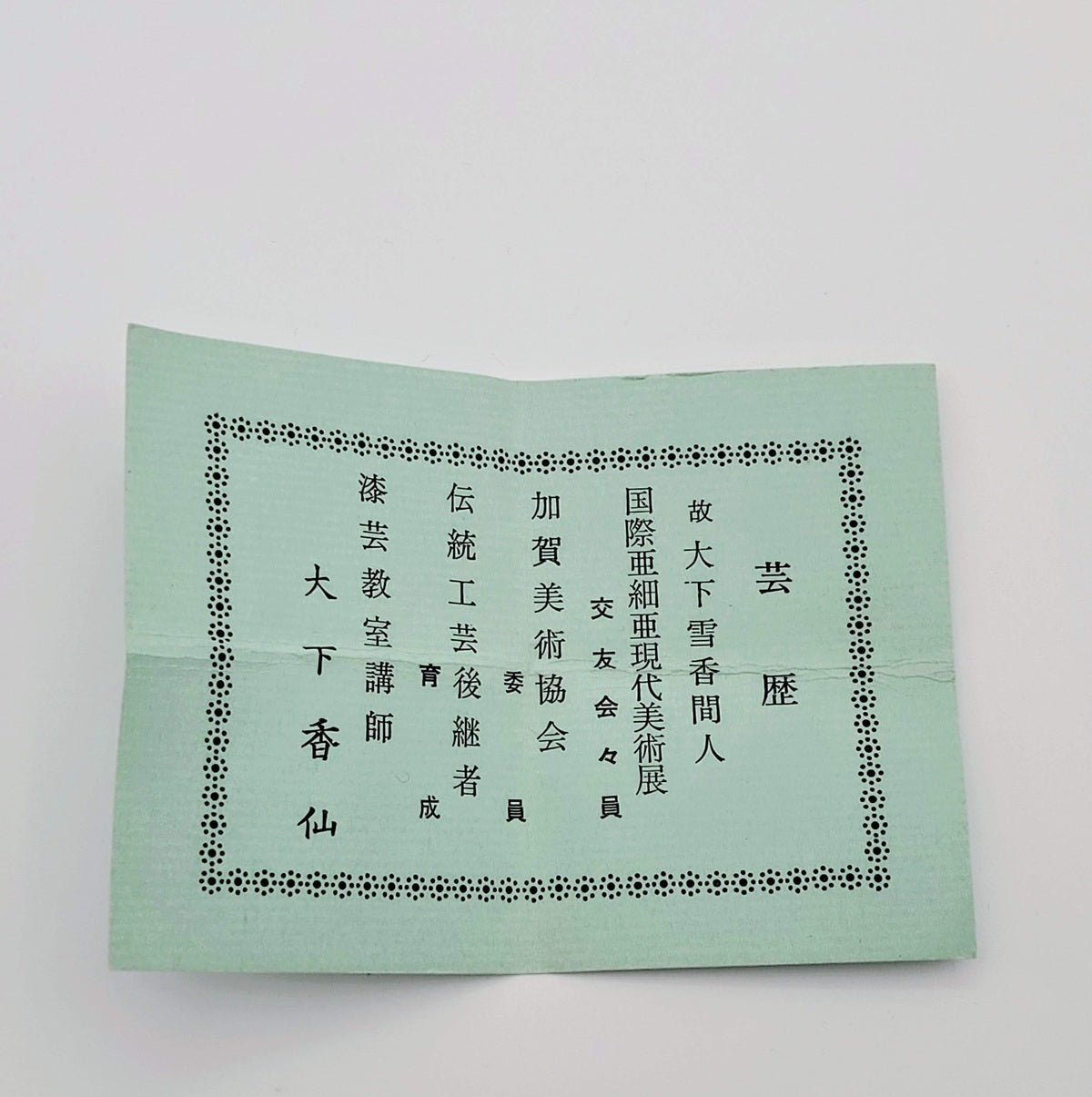
The document confirms that this tea caddy truly originates from a recognized professional lacquer artist of the Kaga school, with official memberships and a teaching position, serving as strong proof of its authenticity and artistic background.
Signature and maker
The Ōshita Kōsen family is one of the longest-running maki-e studios in Japan. The third generation, Ōshita Kōsen, the maker of this natsume with camellia motif (likely crafted around 1965–1975), embodied the essence of Kaga aesthetics: refinement, balance, and timeless craftsmanship.
The current studio, led by Ōshita Kōsei (fifth generation), continues this legacy and has introduced Classic Ko, a contemporary interpretation of urushi art in which traditional techniques are applied to modern objects such as jewelry and design art pieces. In this way, the name Kōsen remains a symbol of Japanese craftsmanship, heritage, and aesthetic beauty to this day.