Natsume Hinode-tsuru 日の出鶴 by Miyata Munekage 宮田宗景, Echizen
Natsume Hinode-tsuru 日の出鶴 by Miyata Munekage 宮田宗景, Echizen
Couldn't load pickup availability
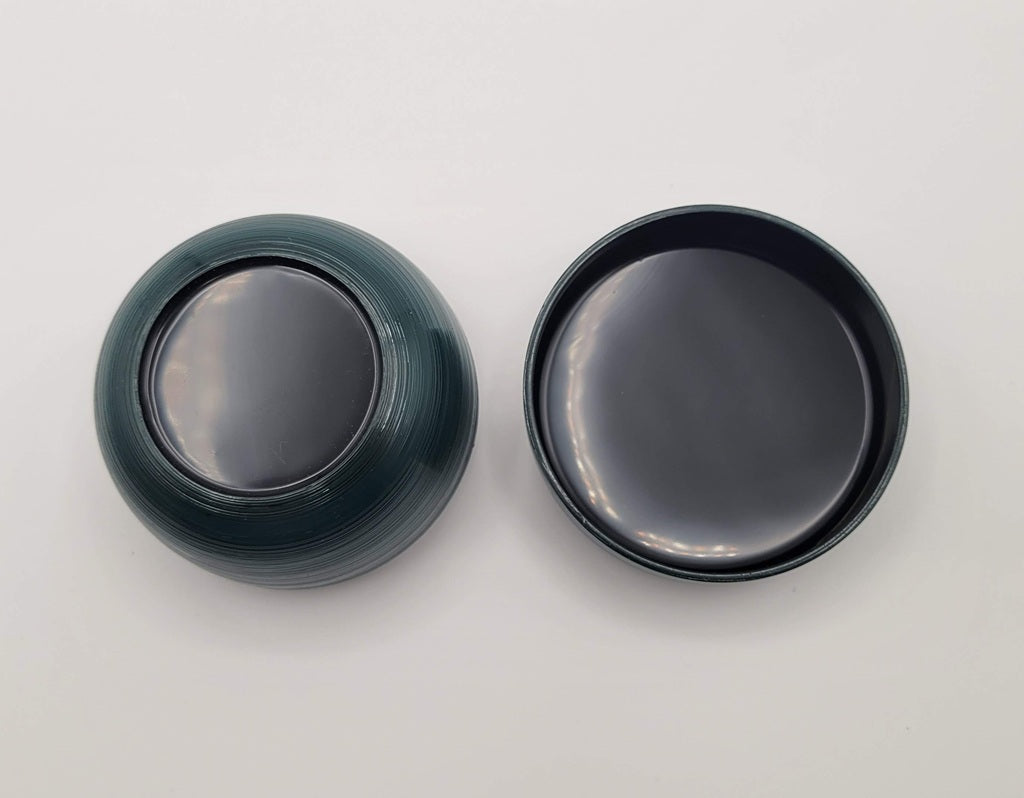
This large natsume by Miyata Sokei (宮田宗景) is decorated with a refined maki-e depiction of two flying cranes in front of a red-orange rising sun. The visible brushstrokes are applied according to the traditional hakeme-nuri technique (刷毛目塗り), in which the brushwork is intentionally left visible.
Motif
The birds are rendered with lightness and elegance, creating a sense of movement and stillness simultaneously. The warm glow of the sun contrasts subtly with the cool background and enhances the spatial quality of the composition. This sober and balanced design creates a poetic tension between emptiness and detail, entirely in line with the aesthetics of refined lacquer art.
Symbolism
In Japanese culture, the crane and the rising sun are classic symbols of good fortune. The crane represents long life, loyalty, and spiritual elevation; according to tradition, it lives for a thousand years and remains loyal to its partner for life. The rising sun (hinode) symbolizes renewal, hope, and prosperity, and marks the beginning of a new cycle. In the tea ceremony, these motifs reinforce the idea of harmony and a favorable beginning. Together, they represent a future of happiness, connection, and continuity, in line with the ideals of tranquility and balance within wabi-cha.
Ao-urushi
Ao-urushi (青漆) is a rare, deep blue color created through special pigmentation in the urushi lacquer. It evokes associations with nature, tranquility, and harmony, and enhances the vividness of the motif. Moreover, this hue forms a harmonious complement to the bright green color of matcha, visually enhancing the ritual and creating a sense of balance and serenity.
Object details
- Title: Hinode tsuru 日の出鶴
- Maker : Miyata Sokei 宮田宗景
- Period : Showa (ca. 1975–1990)
- Technique Ao-urushi lacquer with hakeme-nuri
- Dimensions approx. Ø 6.5 cm × H 6.0 cm
- Material Wood core with natural urushi lacquer
- Includes: Original tomobako with signature
- Condition: New.
- Origin Japan, Echizen (越前), Fukui Prefecture, Kawada (河和田), Sabae
Signature and maker
Miyata Sokei (宮田宗景) is a maki-e master from Sabae, in the district of Kawada (河和田), the historic center of the Echizen urushi tradition in Fukui Prefecture. According to the original 略歴 (biographical card) from the tomobako, he began his training in Shōwa 45 (1970) under maki-e master Minowa Issei (箕輪一星), and began working independently from Shōwa 50 (1975).
His work is characterized by excellent technical mastery, harmonious forms, and a subtle application of maki-e, in which every brushstroke is carefully considered. He received the Shitsugei Kyōkai Prize (漆芸協会賞) and was selected for the Echizen Maki-e Mihon-ichi (越前蒔絵見本市入選). Both honors are noted on the original card in the tomobako.
Miyata Sokei is respected as a maker of functional and aesthetically balanced chadōgu, and as a prominent figure within the Echizen lacquer tradition. His natsumes combine craftsmanship, symbolism, and aesthetics, and are sought after by collectors and enthusiasts of Japanese urushi lacquerware.
As a gift
This natsume is a perfect gift for special milestones, such as a wedding, a New Year celebration, or any other meaningful transition in life. The motif of Cranes at Sunrise (Hinode-zuru, 日の出鶴) reinforces that symbolism: the cranes stand for long life, loyalty, and prosperity, while the sunrise represents a new beginning, hope, and prosperity. Together, they depict a fresh start and a harmonious future, with attention to what is left behind and confidence in what is to come.
Delen