Wajima-nuri tea scoop (Matami-sai), Shiokutoku-ya Lacquerware Shop
Wajima-nuri tea scoop (Matami-sai), Shiokutoku-ya Lacquerware Shop
Couldn't load pickup availability
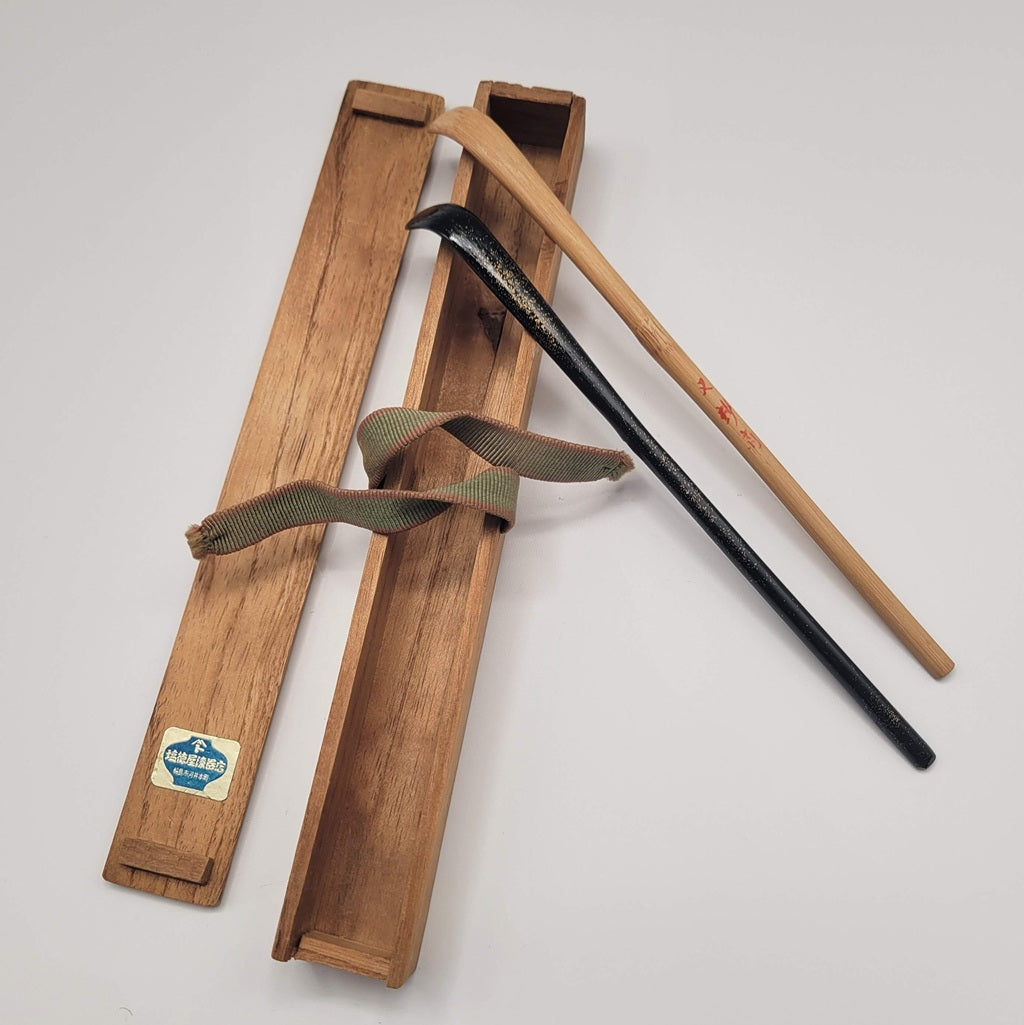
A Japanese chashaku set that reflects the quiet elegance of the tea ceremony. This special combination consists of a black lacquered matcha spoon with subtle gold flecks and a traditional bamboo chashaku, presented together in an original wooden tomobako. The set brings together the balance between natural simplicity and refined urushi lacquerware—a characteristic highly valued within Japanese tea culture.
Tomobako
The box bears an original sticker from 塩徳屋漆器店 (Shiokutoku-ya Shikkiten), a lacquerware shop in Yamanaka (山中町本町). This region in Ishikawa is known for its long tradition of refined lacquerware and artisanal tea ceremony objects. The calligraphy on the lid denotes the object as a chashaku (茶杓), the classic spoon used to carefully portion matcha.
Tea Master
The bamboo chashaku features red calligraphy with the name Matami-sai (又妙斎), a reference found within the Japanese tea ceremony that is often associated with a style or tradition. This does not necessarily mean the piece was crafted by a specific master, but it gives the object additional cultural and aesthetic significance.
Symbology
With its soft patina and subtle traces of use, this set carries an atmosphere of time and attention. It is an object that can be used ceremonially as well as serving as a valuable addition for collectors of Japanese tea ceremony art. Within the tea ceremony, the chashaku symbolizes precision and mindfulness—a small instrument that marks the transition from silence to taste.
Details
- Origin: Japan, Yamanaka lacquerware region
- Material: urushi lacquer, bamboo, and wood
- Includes original tomobako (wooden box)
- Sticker from Shiokutoku-ya Shikkiten (Yamanaka lacquerware shop)
-
Vintage condition with light, age-related traces
Delen